Friday - Saturday: 9.00 - 02.00
Dinner: 17.00-22.30
Hyttefadet during Christmas
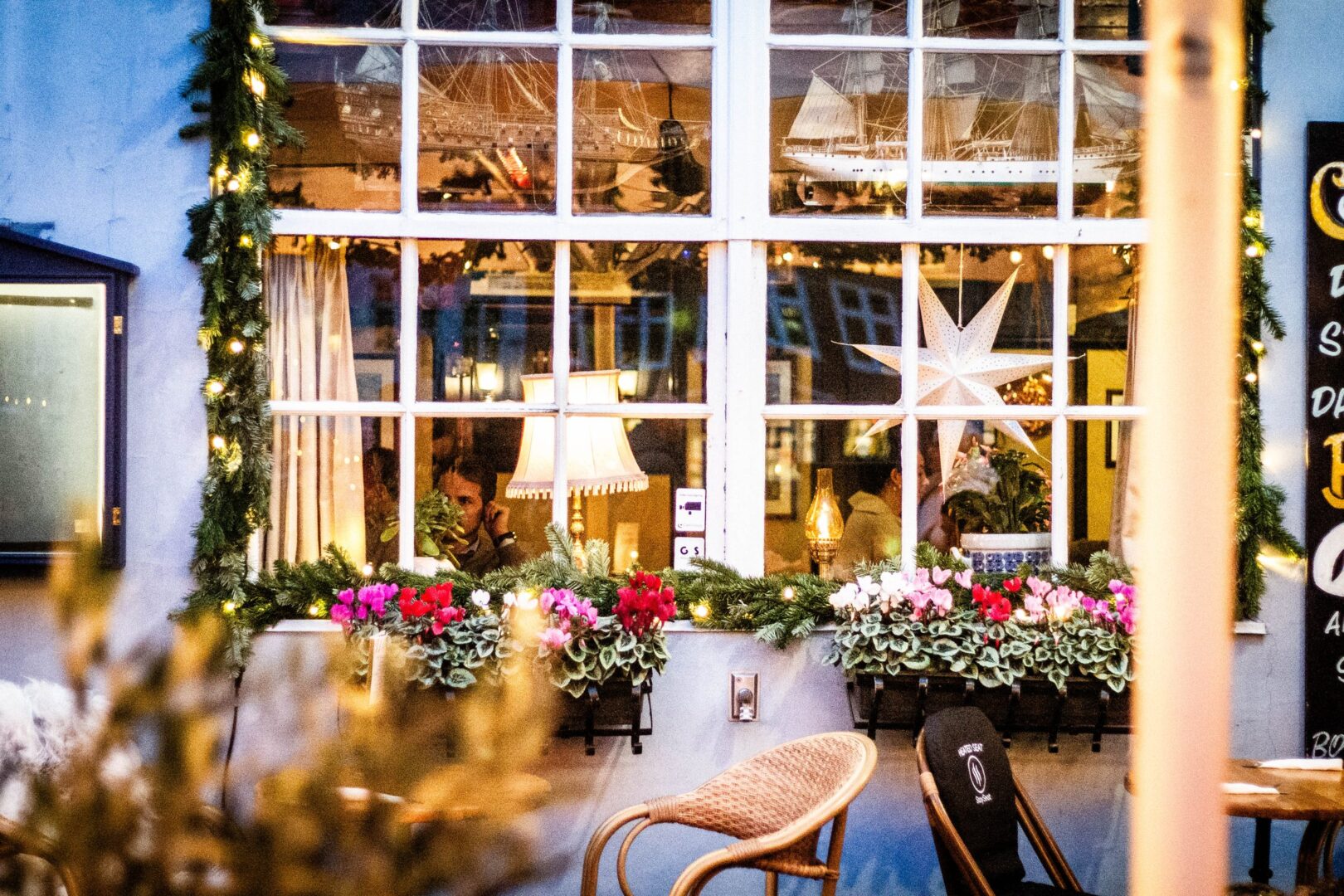
When Christmas comes to Nyhavn and the cold bites along the quay, we draw closer together and go the extra mile to create a cozy atmosphere. Here at Hyttefadet , mulled wine warms us up, apple fritters sweeten our day, and there’s always room for a good story around the table.
Sailor's mulled wine at Hyttefadet
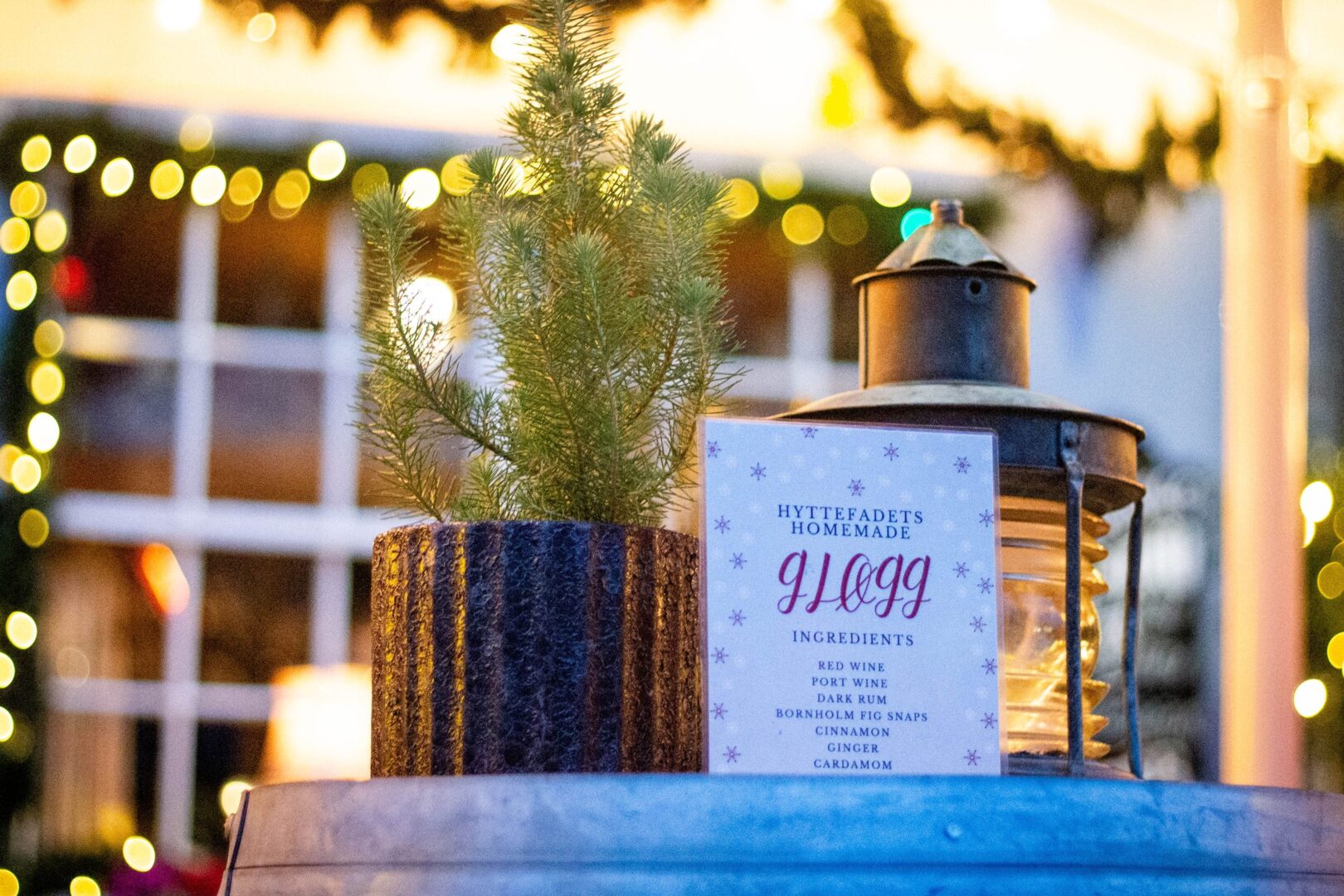
At Hyttefadet , the tradition of gløgg has not been forgotten. When the winter chill sets in, we turn to old-fashioned remedies and pour a glass of homemade Christmas gløgg that warms the body nicely. For a decade, we’ve been brewing and serving our own gløgg—and, in our opinion, it’s the best gløgg in Copenhagen. Although there are plenty of options for mulled wine in Copenhagen, we still believe that our homemade Christmas mulled wine tastes even better in these beautiful surroundings and with the cozy, seafaring atmosphere.
A glass of mulled wine costs 79 kr., and we serve it starting in late October.
Although gløgg is now an integral part of the Danish Christmas, the tradition is relatively new here. But the history of gløgg goes way back. As early as ancient Rome, people drank wine mixed with honey and spices, and in medieval Germany, hot spiced wine was known as Glühwein. Not only did it taste good—it also helped people stay warm.
Over time, the tradition spread throughout Europe, and in Sweden, the glögg we know today was developed. The name comes from the Swedish word *glödga*, which means “to make something glow.” It wasn’t until the late 1940s that glögg became widely popular in Denmark, where interest in Swedish traditions grew following the German occupation.
But what exactly is gløgg? It’s a warm, spiced drink traditionally made with red wine. Over time, countless variations of the Nordic gløgg have been created, but the addition of port, schnapps, or rum is a common thread. It is precisely these additions that, to this day, distinguish it from German Glühwein.
Today, many people are enjoying mulled wine and apple fritters in Copenhagen, where Christmas markets and cozy eateries provide the setting for this tradition.
Traditional apple fritters with a twist
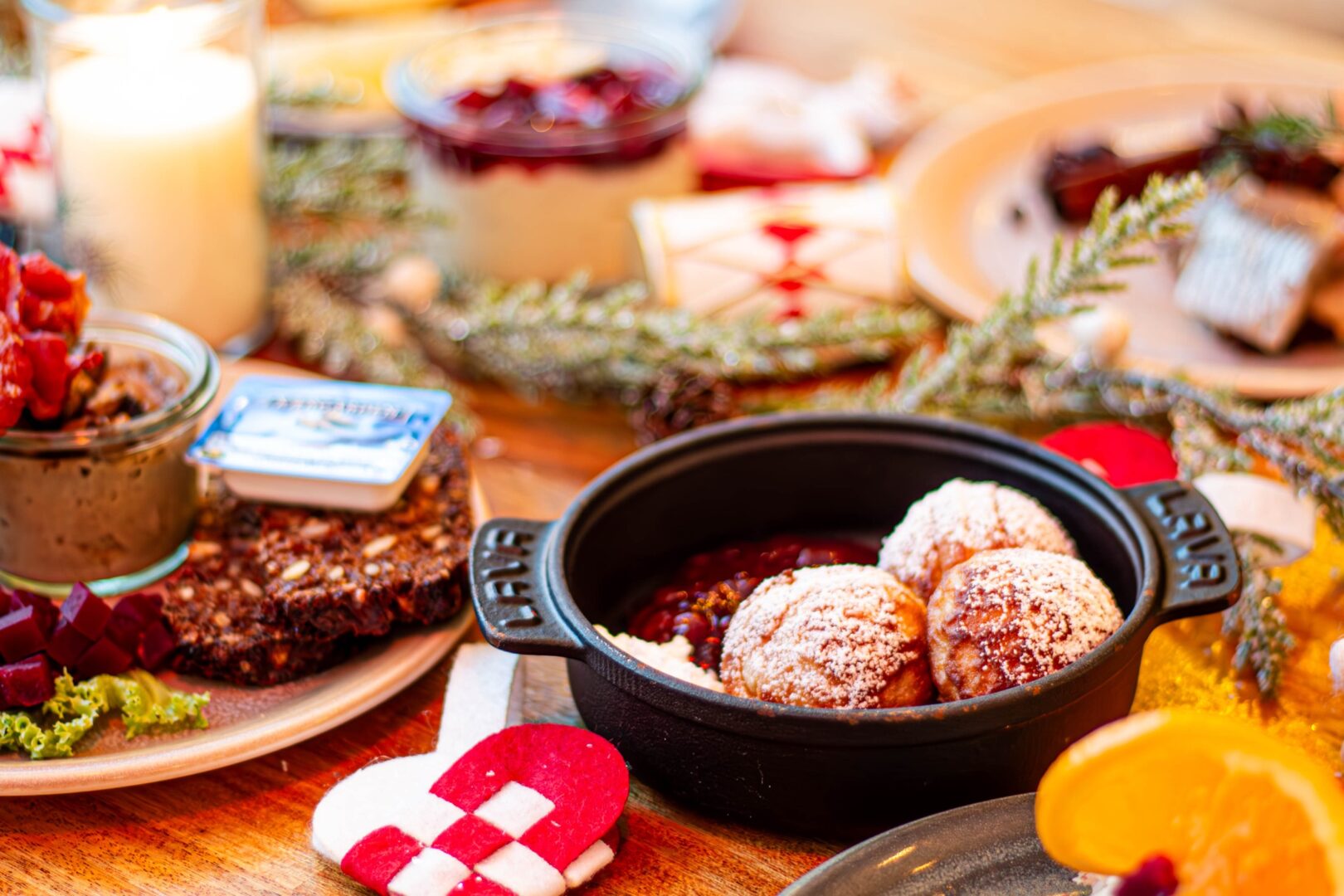
When you mention mulled wine, you can hardly fail to mention æbleskiver. The two have gradually become inseparable, which we at Hyttefadet can certainly understand. Mulled wine and æbleskiver in Nyhavn are—in our opinion—a surefire hit at Hyttefadet. We’ve tried to put a little twist on the traditional æbleskive, which originally has a small piece of apple in the center. We make an apple compote, which becomes the center of the æbleskive. Just like with mulled wine, there are now countless versions of æbleskiver in Copenhagen, so this is our attempt to put our own spin on it.
The history of æbleskiver goes back many years, and at one time, they truly lived up to their name. Back then, people would cut apples into thin slices, dip them in a kind of pancake batter, and fry them over an open fire. So it was quite a different treat from the round æbleskiver we know today. In fact, it wasn’t until the cast-iron stove and the æbleskive pan became popular in the 1800s that the æbleskive took on its familiar round shape.
On farms across the country, æbleskiver were a welcome treat. In some places, farmhands and maids were even given a specific number of them as a Christmas gift. Æbleskiver were also a part of the year’s other holidays, but when the apples ran out in the spring, people began making them without apples—they were reluctant to do without this festive treat.
Gradually, the apple disappeared from most versions, but the name stuck. Today, we like to enjoy them warm with powdered sugar and jam, with a glass of mulled wine at hand—a tradition that we at Hyttefadet certainly know how to appreciate.
October 30 – December 27, 2026
From October 30 to December 27, 2026, the Nyhavn Christmas Market will bring the festive spirit to life along the waterfront. Amid the old, colorful houses, you can take in the scents of Christmas, explore the stalls, and maybe find a gift for someone who already has everything. On select days from November 15 to December 21, you can also hear the singing elf choir as you explore. And if you’re lucky, you’ll catch a glimpse of Carlsberg’s old horse-drawn carriages making their way through Nyhavn.
Make a day of your visit with a canal cruise and see the city from the water, or satisfy your hunger with a delicious open-faced sandwich at one of the many restaurants in Nyhavn.
And if the cold starts to bite your cheeks and nose, you’re always welcome to come inside and warm up with us at Hyttefadet with some homemade apple fritters and mulled wine.
Dates for the singing elf choir:
November 15, 1:00–2:00 p.m.
November 21, 1:00–2:00 p.m.
November 22, 1:00–2:30 p.m.
November 27, 4:00–5:00 p.m.
December 3, 4:00 p.m.–5:00 p.m.
December 12, 3:00–4:30 p.m.
December 13, 3:00–4:00 p.m.
December 18, 4:00–5:00 p.m.
December 21, 1:00–2:00 p.m.
Sunday, December 13
On December 13, the Christmas lights along the quay will be joined by a procession from the water as the Kajakhotellet’s floating St. Lucia procession passes through Nyhavn. It began with just twelve kayaks in 2006 and has since grown into a procession of over 500 decorated kayaks. A canal tour boat carrying the Tritonus choir leads the way. From the pier, you can watch the lights reflect on the water and sing along as the Lucia song plays. According to the Kajakhotellet’s schedule, the procession will pass by Nyhavn around 5:15 p.m.
The custom of carrying candles on Saint Lucia’s Day comes from Sweden, where the day once marked the beginning of Christmas. Copenhagen held its first Saint Lucia procession in 1944, when the Foreningen Norden association sought to strengthen shared Nordic traditions during the occupation. Since then, the Lucia procession has become an integral part of the Danish Christmas, and in Nyhavn, the tradition has made its way out onto the water. Once the last kayaks have glided by, you can extend your Lucia evening a little longer with a glass of warm mulled wine and warm apple fritters at Hyttefadet.
Read more about the route and schedule in the Kayak Hotel's program for the Lucia procession.
This is what it looked like when the Kajakhotel’s Lucia procession sailed through Copenhagen in 2015. The video is provided by the Kajakhotel and plays on YouTube when you click on it.
We would like to use cookies for statistical purposes, to track our ads on Google, and to display the Google Map on the contact page. If you agree, Google will receive information about your visit, such as which pages you view and whether you make a reservation. You can always change your selection or withdraw your consent in the Cookie Settings.